Cape Town's trees
The City recognises the critical role trees play in the urban environment and the multiple benefits trees provide to the people of Cape Town and the general liveability of the city. We need to ensure that we take proper care of our existing trees and the trees that we plant.
About Cape Town's trees
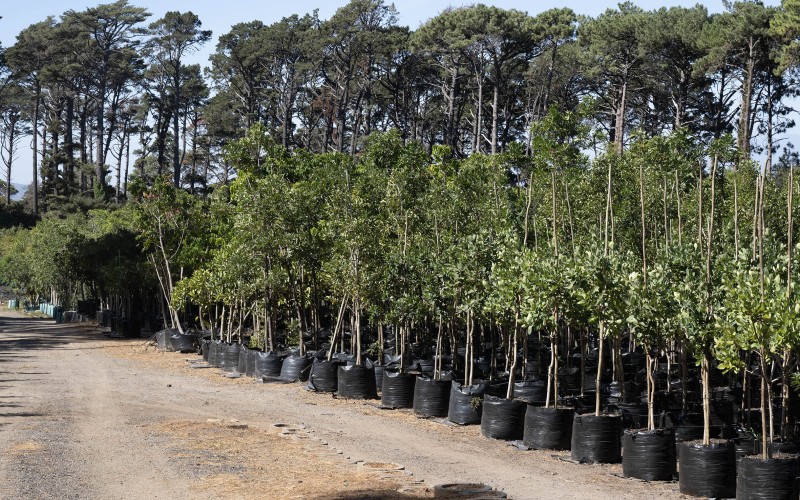
Cape Town is situated in one of the most biodiverse regions in the world, however, it is not a naturally tree-rich region. With our winter rainfall pattern, it is challenging to establish trees, as they require water during the dry summer season to grow.
Small areas of indigenous forest can be found in protected areas close to the mountains, such as Newlands, Orange Kloof and Helderberg.
Find out more about
Cape Town's forests and plantations.
Why are trees important?
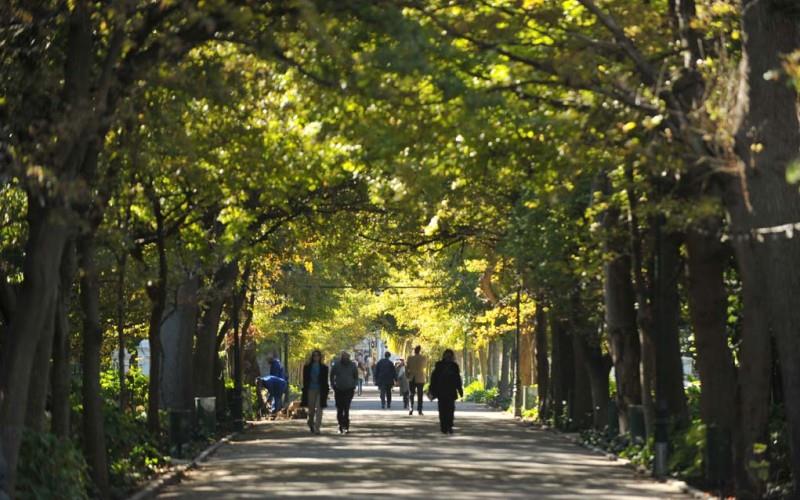
Trees transform neighbourhoods into desirable areas to live, work, and play. They can be used to transform underutilised spaces in destination sites, change roadways into scenic routes, demarcate community gateways and become symbols as part of City landscapes.
In the built environment, trees:
- add beauty, form, and structure to urban design
- screen undesirable sights
- make buildings more ‘human’ in scale and serve to buffer noise, sun, and wind.
- are tangible and aesthetic features in the historic and cultural landscape when there is an absence of built structures
- increase property and suburb values
- support other life forms by providing food and habitat as well as providing other essential ecosystem services
Trees also play an important role in helping us adapt to and
mitigate climate change by:
- improving air quality;
- regulating microclimate;
- combatting the urban heat island effect
- assisting with flood mitigation;
- contributing to carbon sequestration; and
- optimising thermal comfort by shading and cooling, thereby decreasing urban energy consumption.
did you know?
Trees and other vegetation have important mental health and performance benefits. Local tree canopy cover is positively associated with cooling and other aspects of climate moderation. Public greenspaces situated in close proximity to residential areas stimulates regular use of these spaces and results in positive impacts on mental, physical and social health.
Urban Forest Policy
Tree conservation in Cape Town is managed by the City’s
Urban Forest Policy, which:
- Outlines the City’s positions, roles, responsibilities, and goals regarding the planting, management and maintenance of trees in the city.
- Outlines the roles and responsibilities of private landowners and provides guidance in relation to tree management.
- Provides decision-making criteria to ensure informed decision-making, transversally, by all City departments.
The policy aims to ensure that:
- the city’s urban forest is maintained, enhanced and managed;
- the city’s trees contribute positively to the quality of the local environment including mitigating climate change, and improving liveability, sustainability and resilience;
- trees do not pose a risk to the health and safety of people, or of damage to property;
- trees are protected from unnecessary harm; and
- tree assets are managed and cared for with a uniform approach.
Green Infrastructure Programme
Our
Green Infrastructure Programme (GIP) for Cape Town aims to protect and enhance our existing natural environmental assets, as well as promote and create new green infrastructure assets.
By doing so, we can support the sustainability of Cape Town, enhance the city’s living environment and improve its resilience to the effects of climate change.
As part of this programme, we are developing best practice guidelines on green infrastructure. In 2022, our
Recreation and Parks Department identified a
list of tree species suitable for planting in Cape Town. Those trees that are known to be hosts or reproductive hosts to the polyphagous shot hole borer are noted.
Polyphagous Shot Hole Borer (PSHB) Beetle threat
The
Polyphagous Shot Hole Borer (PSHB) is an invasive species that currently poses a serious threat to Cape Town’s urban forest. Apart from infected wood, the beetle can spread through clothing, vehicle crevices, or contaminated horticultural equipment. We need the support and collaboration of residents and businesses to slow down the spread of the pest.
Would you like to print this page?
print